Lunes, Marso 25, 2013


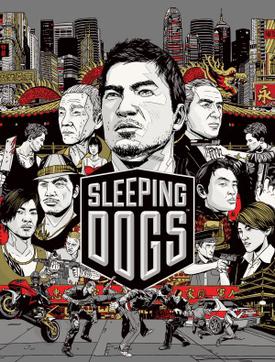
Sleeping Dogs is a 2012 open world action-adventure video game developed by United Front Games in conjunction with Square Enix London Studios and published by Square Enix, released on August 14, 2012, for Microsoft Windows, PlayStation 3, and Xbox 360. Sleeping Dogs takes place in Hong Kong and focuses on an undercover operation to infiltrate the Triads.

The game started development as an original title, but was announced in 2009 as True Crime: Hong Kong, the third installment and a reboot of the True Crime series. As a result of the game’s high development budget and delays, it was canceled by Activision Blizzard in 2011. Six months later, it was announced that Square Enix had picked up the publishing rights to the game, but the game was renamed Sleeping Dogs in 2012 since Square Enix did not purchase the True Crime name rights.

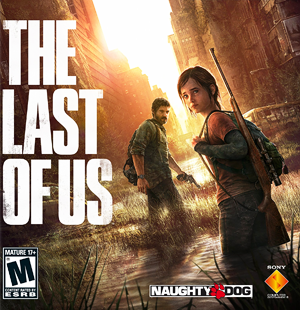
The Last of Us


The story is set two decades after a cordyceps-type fungus has killed millions, with nature gradually retaking the abandoned cities and towns. The survivors are hemmed inside quarantine zones, completely under the heel of the United States military, with order and screening for any Infected being viciously maintained under martial law. Joel, a hardened black-marketeer within one of the quarantine zones, goes through an event which makes him promise an old friend that he will get a young, fourteen year old girl named Ellie, away from the harsh regime to a resistance group known as the Fireflies. They begin a journey through the USA, avoiding the Infected, humanoid creatures whose sole aim has become spreading the fungal infection. Joel and Ellie also have to avoid scavengers that survive outside the quarantine zones who see Joel and Ellie as their latest prey. Adding to their problems, the military is determined to find Ellie and bring her back under their power.

Guild Wars 2


Guild Wars 2 is a massively multiplayer online role-playing game developed by ArenaNet and published by NCsoft. Set in the fantasy world of Tyria, the game follows the re-emergence of Destiny's Edge, a disbanded guild dedicated to fighting the Elder Dragons, a Lovecraftian species that has seized control of Tyria in the time since the original Guild Wars. The game takes place in a persistent world with a story that progresses in instanced environments.

Guild Wars 2 claims to be unique in the genre by featuring a storyline that is responsive to player actions, something which is common in single player role-playing games but rarely seen in multiplayer ones. A dynamic event system replaces traditional questing, utilising the ripple effect to allow players to approach quests in different ways as part of a persistent world. Also of note is the combat system, which aims to be more dynamic than its predecessor by promoting synergy between professions and using the environment as a weapon, as well as reducing the complexity of the Magic-style skill system of the original game. As a sequel to Guild Wars, Guild Wars 2 features the same lack of subscription fees that distinguished its predecessor from other commercially developed online games of the time, though a purchase is still required to install the game. As reported by NCsoft and ArenaNet, by September 13 (about 2 weeks after launch), despite temporarily halting first-party sales, the game has sold over 2 million copies. The game's peak concurrency exceeds 400,000 players. By January 2013 the sales have surpassed 3 million copies.

Call of Duty: Black Ops II


Call of Duty: Black Ops II is a first-person shooter video game, developed by Treyarch and published by Activision (Square Enix for Japan). It was released on November 13, 2012 for PlayStation 3, Xbox 360, and Microsoft Windows and on November 18, 2012 in North America, November 30, 2012 in Europe and Australia for the Wii U. Square-Enix released the game for the Japanese market on November 22, 2012 as a subbed version. A Japanese voice-dubbed version was released separately on December 20, 2012. The Japanese release of the Wii U port is only the dubbed version since the console was not available in Japan in November. Black Ops II is the ninth game in the Call of Duty franchise of video games and a sequel to the 2010 game Call of Duty: Black Ops. The game was launched at 16,000 stores worldwide at midnight on November 13, 2012.

Black Ops II is the first game in the Call of Duty franchise to feature future warfare technology and the first to present branching storylines driven by player choice. It also offers a 3D display option. A corresponding game, Call of Duty: Black Ops: Declassified, was released simultaneously on the PlayStation Vita. Within 24 hours of going on sale, the game grossed over $500 million, beating 2011's Modern Warfare 3 to become the biggest entertainment launch of all time. It went on to sell 7.5 million copies in November 2012, making it the highest grossing game of the month.

The game is the first in the series to feature significant elements of nonlinear gameplay, most notably multiple endings.

New Super Mario Bros. 2


New Super Mario Bros. 2 continues the style of gameplay from New Super Mario Bros., featuring side-scrolling platform action as Mario or Luigi attempt to rescue Princess Peach from Bowser and his Koopalings. Along with returning power-ups from the first game, such as the Mini Mushroom and Mega Mushroom, the game also sees the return of the Super Leaf from Super Mario Bros. 3, allowing the player to tail whip enemies or fly up into the air. Similar to Super Mario 3D Land, an Invincibility Leaf will appear if the player loses lives at least five times during a stage, granting raccoon abilities and invincibility until the end of the stage. The main game has both single player and multiplayer options: two players, each with his or her own Nintendo 3DS and copy of the game, play together simultaneously as Mario and Luigi. Like the previous games, players can collect Star Coins hidden throughout each level, which can be spent to unlock new areas on the overworld map. It is also possible to enter the third secret world by collecting many star coins and defeating Bowser for the first time: in this world, the Star Coins are replaced with Moon Coins (and so do not add to the player's Star Coin count) and there is a secret boss battle with Dry Bowser at the end of it.

The game has a strong emphasis on collecting gold coins, with various new items dedicated to producing large amounts of coins. These include Gold Flowers that turn blocks into coins, rings that temporarily turn enemies gold and a block mask that produces coins as Mario runs. The game keeps track of all coins collected by the player and displays the total on both the title screen and on the overworld map. If the player has SpotPass enabled in the game, this total can be uploaded to Nintendo Network and the player will be updated with the grand total of all coins collected by all players worldwide.

In addition to the main game, New Super Mario Bros. 2 features a Coin Rush mode, unlocked after the player completes the first world. In Coin Rush, the player plays through three randomly chosen levels collecting as many coins as possible. Star and Moon Coins add several coins to the player's running total in this mode. However, the player is given only one life and each level gives a time limit of 50 or 100 seconds. The 1-up Mushrooms are replaced by Gold Mushrooms in this mode. If mid-way flags are passed or timers are collected, the time limit will be extended. If the player completes the run, the accumulated total of coins collected can be saved as the player's high score, which can be transmitted to and challenged by other players via StreetPass. Additional course packs can be purchased as downloadable content.

Borderlands 2

 
Borderlands 2 builds upon the gameplay elements introduced in its predecessor, Borderlands. It is a first-person shooter that includes elements found in role-playing games, leading Gearbox to call the game a "role-playing shooter." At the start of the game, players select one of four new characters, each with a unique special skill and proficiencies with certain weapons. After this, players take on quests assigned through non-player characters or bounty boards, each typically rewarding the player with experience points, money, and sometimes a reward item. Players earn experience by eliminating foes and completing in-game challenges (such as getting a certain number of kills using a specific type of weapon). As they gain levels from experience growth, players can then put skill points into a skill tree that features three distinct specializations of the base character. As with the first game, Borderlands 2 features a procedural-generated loot system, whereby weapons and other equipment dropped by foes, found in chests, or offered as quest items have numerous statistics that are generated randomly, affecting factors such as weapon damage, accuracy, magazine size, and added effects like elemental damage. Randy Pitchford, noting that the procedural system in the first game generated 17.75 million possible guns, claimed that the variation in Borderlands 2 is much larger.

Returning gameplay features from the first game will include the 3-branch skill tree, class-mods, and four-player online cooperative modes. New features include a more expansive and customizable weapons system, reworked four-seat drift-able vehicles and vehicle physics elements.

In addition, the artificial intelligence (AI) system has been reworked for the game. Non-enemies will populate the game world more often and will travel around different locations depending on the time. According to Gearbox VP Steve Gibson, enemy AI will encourage teamwork, such as flanking, as well as taking cover when wounded, though lower level enemies like Psychos will still embrace the mentality of "Wow that's a gun! I want my face in front of it!".[3] Shooting enemies will stun or cripple them depending on where they are shot, such as shooting a Hyperion robot's arms will cause the arms to fall off, impairing its damage-dealing capabilities. For a change, enemies will be intelligent enough to climb and traverse difficult terrain to pursue the player. Enemies will also be able to interact with each other. For example, certain enemies can heal their teammates, boost their shields for defense, or use them as shields to protect themselves.

PlayStation All-Stars Battle Royale


PlayStation All-Stars Battle Royale is a fighting game which plays conceptually similar to that of Nintendo's Super Smash Bros. series. Up to four players can battle each other using characters from various Sony franchises such as God of War, PaRappa the Rapper and Sly Cooper, as well as third-party franchises like BioShock. There are, however, differences in how opponents are defeated. During the game, players damage other players to receive orbs that build up a power meter at the bottom of the screen (These orbs can also be found on the stage over the course of the match). Earning enough power allows players to use one of three levels of super moves which can be used to defeat opponents and earn points. The game features cross-platform play between the PlayStation 3 and PlayStation Vita versions.

The game features a traditional single-player arcade mode, in which players must defeat several randomly-selected opponents, followed by a character-specific rival battle and, ultimately, a battle against the game's main antagonist and final boss, Polygon Man. Multiplayer modes include time-based matches, where players compete to achieve the most kills within a time limit, stock based matches, where players attempt to be the last one standing, and kill-limit matches, where players compete to be the first to reach a certain number of kills. The game also features a single-player challenge mode, in which players attempt to complete specific objectives.

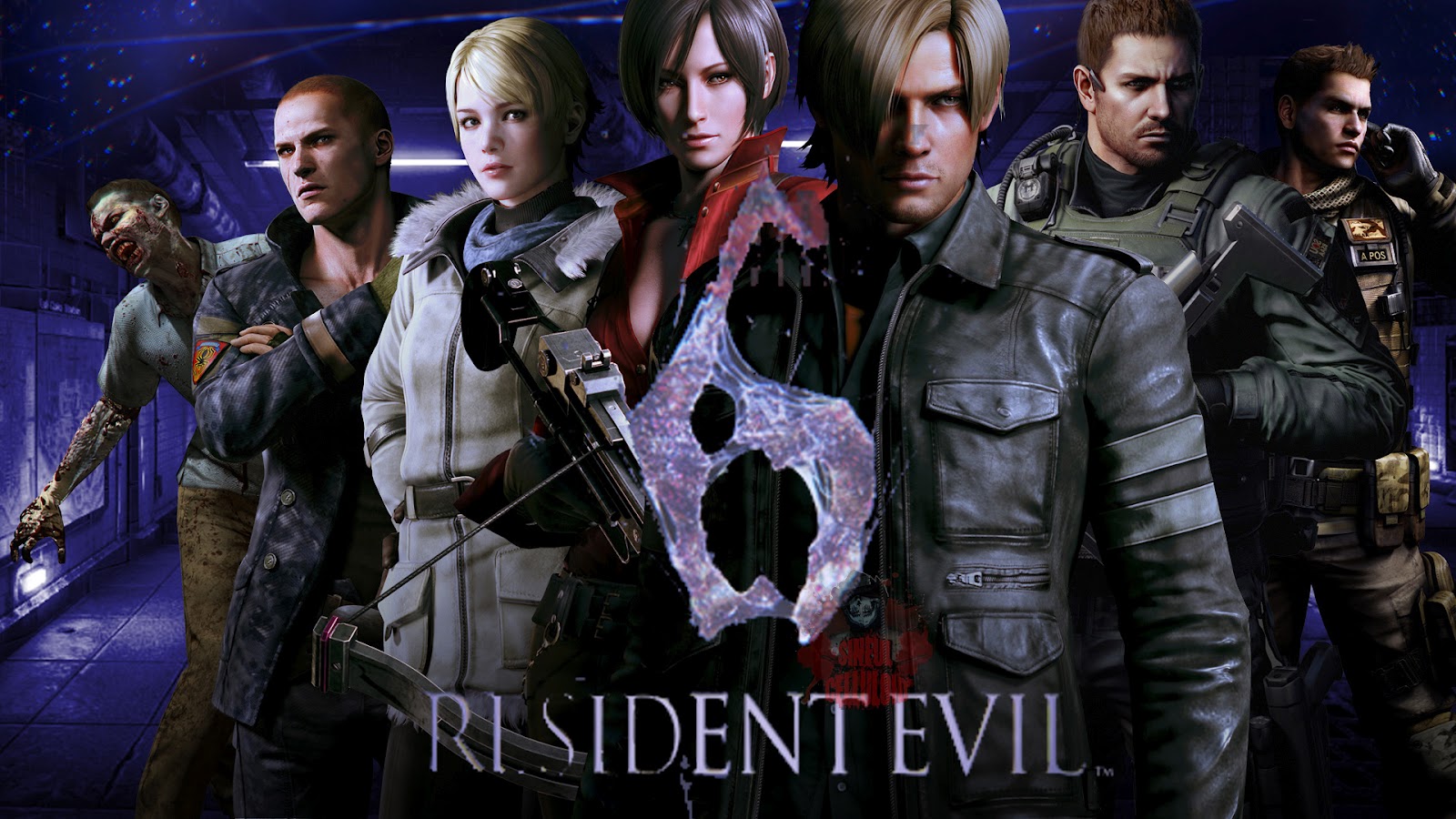
Resident Evil 6


 Resident Evil 6 allows players to select between three scenarios with connected storylines, each with their own intentionally different design. Each scenario follows one of three main protagonists - Leon S. Kennedy, Chris Redfield and Jake Muller. The player characters from each scenario will have their own partners which are controlled by either the computer AI or another human player via local or online multiplayer. When playing in single player, the player can allow another player to join in online at any time and inventories are now kept separate from each other. A fourth scenario is unlocked after the player has finished the other three, in which the player controls Ada Wong (without a partner). The game also features the Mercenaries mode, where players fight hordes of enemies, and the Agent Hunt mode which allows players to take control of random enemies in other people's games.

Players can pick up items quickly and change weapons in real time. Players are also able to move while aiming their firearms. A new feature comes in the form of tablets, in which players can recover health at the push of a button. More tablets can be produced by locating herbs. By finding various herbs and saving them before converting, more tablets can be obtained from them. If one player runs out of health, that player will have a short time to try and defend him/herself while his partner attempts to revive them. If either player is killed, gameplay resumes at the last checkpoint. The game will have several primary enemies, including zombies and the newly introduced J'avo. Unlike zombies, J'avo are able to interact with each other to plan an attack, use weapons, and heal themselves. Certain enemies drop skill points when killed, which can be picked up and spent on upgrades such as increased weapon effectiveness or specific ammunition drops. Players can equip three of these upgrades which apply to all the campaigns. There are set piece events that require different approaches, such as shooting at zombies, prying through a door, and attempting to locate keys in a vehicle.

Halo 4


Halo 4 is a shooter game in which players predominantly experience gameplay from a first-person perspective; the game perspective switches to third-person when using certain weapons, abilities and vehicles. The player's head-up display (HUD) shows real-time information on the player character's armor system, such as shield status, information on current weapons and abilities, and waypoints for goals and objectives. The HUD also has a motion tracker that detects allies, enemies, and vehicles within a certain radius of the player.

The game sees the return of the alien Covenant as foes, and introduces a new type of enemy called the Prometheans, which are Forerunner constructs. There are three types of Prometheans: Knights serve as leaders of the group and are considered as the deadliest of the Promethean forces; Crawlers are a weaker class that often attack in packs; and Watchers offer support and have the ability to shield or revive Promethean allies.

Halo 4 features updated versions of many human and Covenant weaponry from previous Halo games, as well as introducing new weapons for the humans, Covenant and Prometheans.The game also features reusable equipment, called armor abilities, introduced in Halo: Reach. New armor abilities are autosentry; hardlight shield, which activates a protective barrier similar to a riot shield; Promethean vision, which diminishes environment detail and shows hidden players as silhouettes; regeneration field, which heals all players in close proximity and can emit a short range kinetic blast; and thruster pack, which allows the player to launch themself several feet in a horizontal direction. Returning abilities include active camouflage; jetpack; and hologram, which creates a facsimile of the player running towards a target point. Sprinting returns in Halo 4, however players can now use it independently of their armor ability. New gameplay mechanics introduced to the series include throwing and catching, which has been implemented into the multiplayer game types: Oddball and Grifball.

Biyernes, Marso 22, 2013

Assassin's Creed


Assassin's Creed is a historical action-adventure open world stealth video game series that, as of 2013, consists of five main games and a number of supporting materials. The games have appeared on the PlayStation 3, Xbox 360, Microsoft Windows, Mac OS X, Nintendo DS, PlayStation Portable, PlayStation Vita, iOS, HP webOS, Android, Nokia Symbian Windows Phone platforms, and the Wii U. The main games in the franchise were developed by Ubisoft Montreal, with the handheld titles developed by Gameloft and Gryptonite Studios, with additional development by Ubisoft Montreal. The series has received much popularity from the general public and acclaim from critics, and has sold over 55 million copies as of March, 2013.

The series took inspiration from the novel Alamut by the Slovenian writer Vladimir Bartol. and considered to be the spiritual successor to the Prince of Persia series.